How a long-time, rising political voice found resonance in an unexpected demographic.
What draws a growing number of young adult women—many of whom were raised outside the traditional school system—to the sharp rhetoric and unconventional charisma of Mark and his politics? Far from a passing curiosity, this phenomenon reveals something deeper about identity, community, and the lingering influence of formative years spent learning at home. In this piece, we explore not just the what, but the why behind the connection, and how Mark’s messaging taps into a worldview shaped by independence, introspection, and often, a deep mistrust of institutions.
At first glance, there is little to suggest that Mark—a man with the affect of a substitute civics teacher and the rhetorical range of a toaster oven—would attract a loyal following among young adult women, often called Gen Z but we call them Generation Jumpstart, once educated in the warm, vaguely theocratic glow of home-based curricula. And yet, here they are: discussing subsidiarity in Instagram threads, quoting Mark with the solemnity of a librarian that actually enforces ‘quiet rules’, and claiming, without irony, that he “just gets it.” Whether it’s his emphasis on self-reliance, his suspicion of government oversight, or simply the fact that he reminds them of the homeschool dad who taught chess in a flannel shirt, Mark has become a lodestar of sorts—part ideology, part nostalgia, part unintentional ASMR (Autonomous Sensory Meridian Response). It may not make sense to the political establishment, but then again, neither does long division taught with a felt board and prayer.
[Introduction done, full essay continued further below, past the pictures of Earlie & Carrie.]

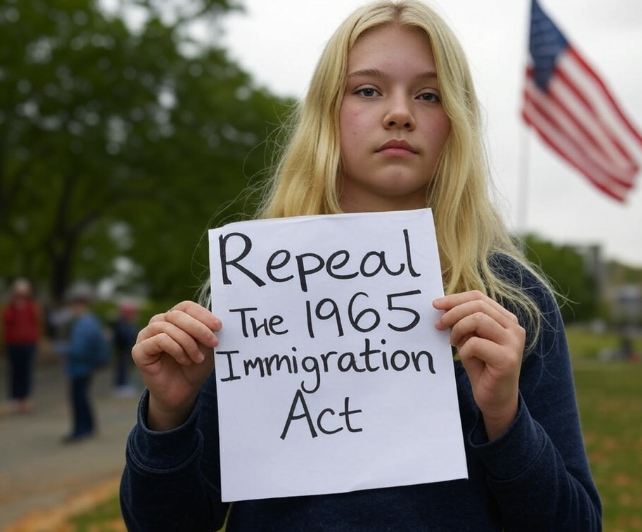
Earlie White, 19, Home-schooled in Washington

Carrie Laramie, 18, Home-schooled in Oregon

Amid the ongoing decline of America’s public education system, the rise of homeschooling was not just predictable—it was inevitable. By 2025, it has evolved from a niche alternative into a mainstream refuge for families disillusioned with institutionalized learning. The parents leading this shift often share a common conviction: that education should prioritize foundational knowledge, moral integrity, and intellectual discipline over ideological social engineering. Many of these families lean conservative or Christian, seeking curricula that emphasize literacy, mathematics, civics, and history free from politicized frameworks like Diversity, Equity, and Inclusion (DEI), Critical Race Theory (CRT), or other progressive doctrines. For them, homeschooling isn’t merely an academic decision—it’s a cultural safeguard, a conscious rebellion against a system they see as hostile to traditional values and intellectual independence.
The outcomes speak for themselves. Homeschooled students consistently outperform their public-school peers in standardized testing, college entrance exams, and academic competitions. Freed from rigid bureaucracies and one-size-fits-all mandates, homeschooling families can tailor their instruction to each child’s learning style, strengths, and pace—an approach that nurtures mastery rather than mediocrity. But beyond academics, homeschooling often fosters stronger family bonds, deeper moral grounding, and a clearer sense of personal responsibility. Students raised in this environment are frequently more articulate, self-directed, and socially mature than the caricatures painted by critics. Rather than being stunted by isolation, many thrive in community co-ops, extracurricular networks, and faith-based initiatives that reinforce the very values their parents set out to preserve. In short, homeschooling doesn’t just shield children from ideological overreach—it prepares them to engage the world with both intellect and integrity.
Critics often raise concerns about homeschooling’s lack of “socialization,” claiming that homeschooled children miss out on essential peer interaction. But in reality, today’s homeschooling environment is more networked and dynamic than ever. Through church groups, athletic leagues, co-ops, and community events, homeschoolers often engage more meaningfully with a wider age range and set of experiences than their traditionally schooled peers. Another concern involves academic oversight—but standardized testing, curriculum accreditation, and online education platforms have provided robust frameworks to ensure quality and accountability without surrendering autonomy. Some also argue that homeschooling exacerbates educational inequality, but this critique misses the fact that many homeschoolers operate on modest incomes and still achieve remarkable results. At its core, the homeschooling movement is less about privilege and more about priority—placing the intellectual and moral development of children above political trends or bureaucratic mandates.
Contrary to the myth that homeschooling operates in a lawless vacuum, the reality is that many states mandate academic accountability through standardized testing or formal evaluations. From Florida to North Carolina, Georgia to Minnesota, students educated at home are often required to take nationally recognized tests or undergo assessments by certified educators to ensure academic progress. In places like Colorado, testing is enforced at regular intervals throughout a child’s education, while states such as Massachusetts and Hawaii require proof of instruction and student evaluation. Though oversight varies by jurisdiction, a significant number of states hold homeschooling families to clear academic benchmarks, with consequences for noncompliance ranging from loss of homeschooling privileges to legal action. This structure directly rebuts the claim that homeschooling is an educational free-for-all; in truth, many families operate within rigorous, state-recognized standards while maintaining the freedom to shape content and values according to their convictions.
In an age where public institutions are increasingly entangled with ideological agendas, homeschooling represents more than an educational alternative—it’s a quiet revolution in defense of intellectual freedom, parental authority, and moral clarity. It reflects a growing movement of families reclaiming their right to teach truth over trend, substance over slogans. These parents are not withdrawing from society; they are shaping its future, one well-grounded child at a time. And while critics may scoff or seek to regulate them out of existence, the results—and the resolve—speak volumes. In a nation struggling to remember who it is, perhaps it’s the homeschoolers who are preserving what it was meant to be.
No wonder why former home-school girls and now young adult women, like Earlie White, Carrie Laramie and Darcy Pembleton (pictured below) gravitate to and become understudies to a politician like Mark Greene, a write-in candidate for Mayor of Federal Way, who not only embraces our Judeo-Christian foundations and moral understandings and convictions, but he actually tries to implement these ideas in the political structure of our times, in a society that has become essentially warped by moral decay, decadence and Globalist depredations.
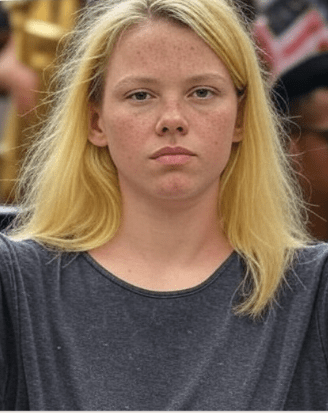
Darcy Pembleton, 20, Home-schooled in Michigan
Footnote: 
 (Mostly AI with our tweaks)
 American Sun-Light News & Literature