Many domestic activists who support open-border policies—not the least among them, first- and second-generation immigrants—have taken to the streets alongside their globalist allies. Their agenda is not vague: they seek a fundamental dismantling of American sovereignty and a rejection of traditional cultural values. What’s more, they openly call for the suppression of right-leaning voices that celebrate America’s legacy and principles. For some of these activists, admiration for outlander/foreign global cult leaders, like Pramila Jayapal, Kshama Sawant and Ilhan Omar, seems to stem less from ideology than from an internalized discomfort with their American identity. In certain cases, this even extends to resentment of their cultural or ethnic heritage. This impulse to idealize foreign influences may be less about lofty ideals than a symptom of low self-esteem, shame, and a lack of cultural confidence.
This rejection of national identity isn’t happening in a vacuum. Over decades, a cultural shift in academia, media, and politics has cultivated a sense of guilt and alienation among younger generations. They’re taught to view American history primarily through the lens of oppression and injustice, with little room for pride in its founding ideals or global contributions. For many, especially those raised amidst identity politics, patriotism has become suspect—seen as outdated at best, dangerous at worst. This conditioning leaves a vacuum where pride and belonging might have been, and into that space flows a yearning for alternate sources of meaning. In some cases, this takes the form of idealizing globalism, romanticizing outlander or foreign leadership, or embracing movements that reject Western traditions entirely. But at its core, it often stems from a crisis of identity—where personal insecurity is masked by political activism.
The broader consequences of this erosion of national confidence are increasingly visible. When large segments of a population lose pride in their country, it becomes difficult to foster unity around shared ideals. National holidays, civic traditions, even foundational documents like the Constitution come under suspicion or ridicule. As patriotic symbolism becomes politically charged, institutions lose their ability to function as cultural common ground. This polarization spills into policymaking, where the emphasis shifts from preserving national interests to conforming with transnational ideologies. Policies on immigration, education, and national defense begin to reflect not the will of the people, but the aspirations of global elites. In this environment, citizens who hold traditional values or express pride in national identity are labeled regressive or dangerous—effectively exiled from mainstream discourse.
We need to embrace our American identity, including our heritage, our roots, and every bold, redeeming aspect of ourselves, and soundly reject the Jayapal/Sawant/Omar cults. Keep reading “Alabaster” for your regular, proud American analysis, digest, and spirit of isolationism. Let’s have a renewal, of sorts, of the ‘Happy Days’ era of America (the 1950s and early 1960s). God bless America.
Note: For Federal Way, Washington residents, we recommend writing in the name of Mark Greene for Mayor of Federal Way. An active write-in campaign for the General Election only, and you still need to fill in the circle on the ballot, even after writing out the name.
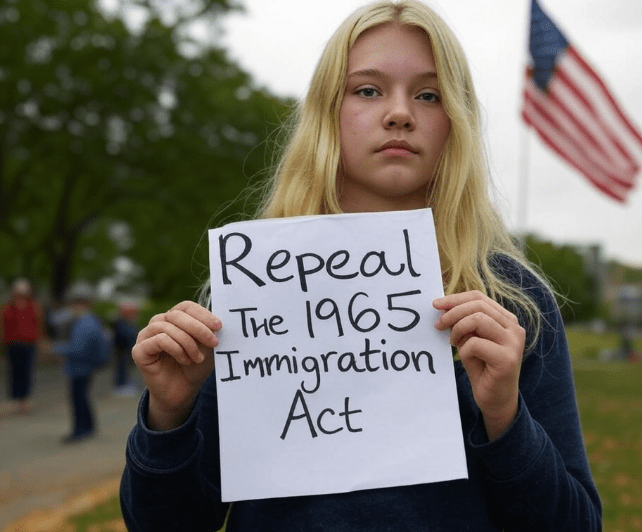
PHOTO: Carrie Laramie, 18 , home-schooled, originally from Portland, Oregon and Mark’s right-hand partner.
Footnote: 
 (Mostly Sun-Light News, assisted by AI)
 American Sun-Light News & Literature